Understanding Grain Lines and Bias in Pattern Layout
When working with woven fabrics, the arrangement of threads determines how the material behaves during cutting, stitching, and wearing. Grain lines refer to the directional structure of the fabric, created by the interlocking of warp and weft threads. Understanding these lines is an essential part of pattern layout, as they influence how a finished piece drapes, stretches, and holds its shape. This article provides an overview of straight grain, cross grain, and bias, and discusses their role in accurate pattern placement.
Pattern layout involves positioning pattern pieces on fabric to make efficient use of material while aligning each piece with the intended grain direction. Misalignment can lead to twisting, uneven hems, or unexpected stretching. Sewists and designers consider grain lines before cutting, as the fabric’s behavior along each direction differs. By examining the characteristics of straight grain, cross grain, and bias, one can approach pattern layout with greater awareness of fabric properties.
The following sections break down each grain line type, explain how they affect fabric movement, and offer practical guidance for aligning patterns. The goal is to support informed decisions in sewing and garment construction, without prescribing specific outcomes.
What Are Grain Lines and Why Do They Matter
Grain lines represent the orientation of threads in a woven fabric. The warp threads run parallel to the selvage and are typically stronger and less stretchy, forming the straight grain. The weft threads run perpendicular to the selvage, creating the cross grain, which has a slight amount of give. Together, these two directions define the fabric’s structural grid. When a pattern piece is placed with its grain line arrow parallel to the straight grain, the garment hangs with stability and resists distortion along the length. Conversely, using the cross grain introduces a modest level of stretch across the width, which can be useful for shaping around curves.
The importance of grain lines extends beyond initial appearance. During wear, a garment constructed off-grain may twist or sag unevenly because the fabric is not aligned with its natural thread network. This can affect fit over time. Pattern instructions typically indicate which grain direction to follow, but an understanding of the underlying principles helps sewists adapt when working with non-standard fabric widths or pattern modifications. Recognizing grain lines also aids in identifying the right side and nap of fabrics, especially when dealing with plaids or stripes.
Straight Grain and Cross Grain: Characteristics and Uses
The straight grain runs parallel to the selvage and is the most stable direction in a woven fabric. It offers little to no stretch and maintains length well. For garments that require vertical stability—such as trousers, tailored jackets, or straight skirts—pattern pieces are usually placed with the lengthwise grain aligning to the body’s vertical axis. This helps the fabric resist sagging and keeps seams from pulling out of shape.
The cross grain, running perpendicular to the selvage, has a slight elasticity due to the weaving process. It is often used for horizontal elements like yokes, waistbands, or areas where a small amount of give is desirable. Cross grain pieces can also be used creatively for design effects, such as stripes that run horizontally across a bodice. However, because cross grain has less stability than straight grain, it is generally not recommended for long, unbroken panels where gravity will pull downward over time.
Choosing between straight and cross grain depends on the intended function of each garment section. For example, sleeves may be cut on the straight grain to minimize stretching at the shoulder, while a gathered skirt might benefit from the slight ease of cross grain. Markings on commercial patterns indicate the preferred grain direction, but sewists can experiment with grain changes as long as they account for changes in drape and fit.
The Bias: Understanding Diagonal Stretch and Drape
The bias refers to any diagonal line relative to the straight and cross grains, but the true bias is a 45-degree angle between them. Fabric cut on the bias has maximum stretch and a distinct fluidity. This happens because the woven threads are at an angle to the cut edge, allowing the fabric to flex and mold more easily. Bias-cut garments, such as slips, cowl necks, or bias tape, use this property to achieve a soft, clinging fit without darts or complex shaping.
However, working with bias requires careful handling. The fabric may stretch significantly during cutting and sewing, leading to uneven edges or distorted seams if not stabilized. Pattern layout on bias calls for extra attention to weight distribution and seam allowances. Some sewists let the fabric hang for 24 hours before cutting to allow natural stretching to occur. Additionally, bias pieces may need to be cut one layer at a time to avoid shifting. Despite these challenges, the bias offers a unique ability to conform to body curves, making it valuable for designs that prioritize drape over structure.
It is also common to combine bias elements with straight grain sections in a single garment. For instance, a dress might have a bias-cut skirt with a straight-grain bodice. Understanding how different grain directions interact helps in planning seam placements and managing fabric behavior. The bias is particularly sensitive to tension, so pressing and handling should be done gently to avoid permanent distortion.
Pattern Placement and Grain Line Alignment
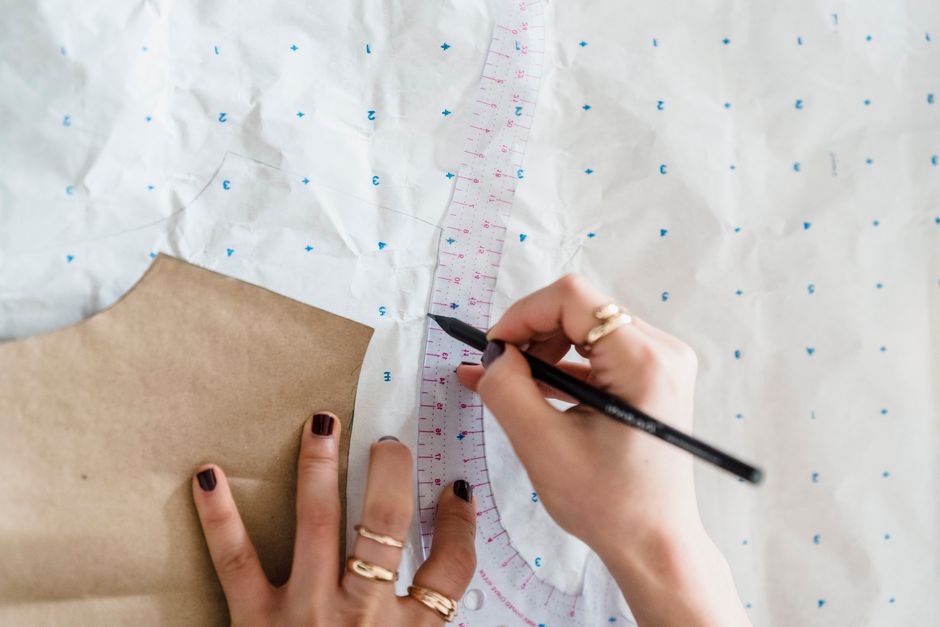
Accurate pattern placement begins with reading the grain line arrow printed on each pattern piece. This arrow should be parallel to the selvage edge or to the straight grain of the fabric. To verify alignment, measure from the arrow to the selvage at both ends; equal distances ensure the piece is straight. Small deviations can cause noticeable twisting in the finished garment, especially in woven fabrics with little give.
When laying out patterns, fabric is typically folded with the right sides together along the lengthwise grain. For pieces that require cross grain alignment, the fabric may be folded differently or cut in a single layer. Some patterns include multiple grain line options for different effects, such as a bias-cut variation for a more draped look. In such cases, the pattern maker usually provides specific instructions. If not, the sewist can rotate the piece to the desired grain direction, adjusting the layout to fit the fabric width.
Fabric with a one-way design, such as nap, pile, or directional prints, introduces additional constraints. The grain line must still be respected, but the pattern may need to be placed in the same direction for all pieces to maintain consistency. For plaids or stripes, aligning intersections across seams becomes important, and grain line accuracy helps match patterns. Taking time to pin and check before cutting reduces the risk of misalignment, especially when working with expensive or limited fabric.
Practical Considerations for Different Fabric Types
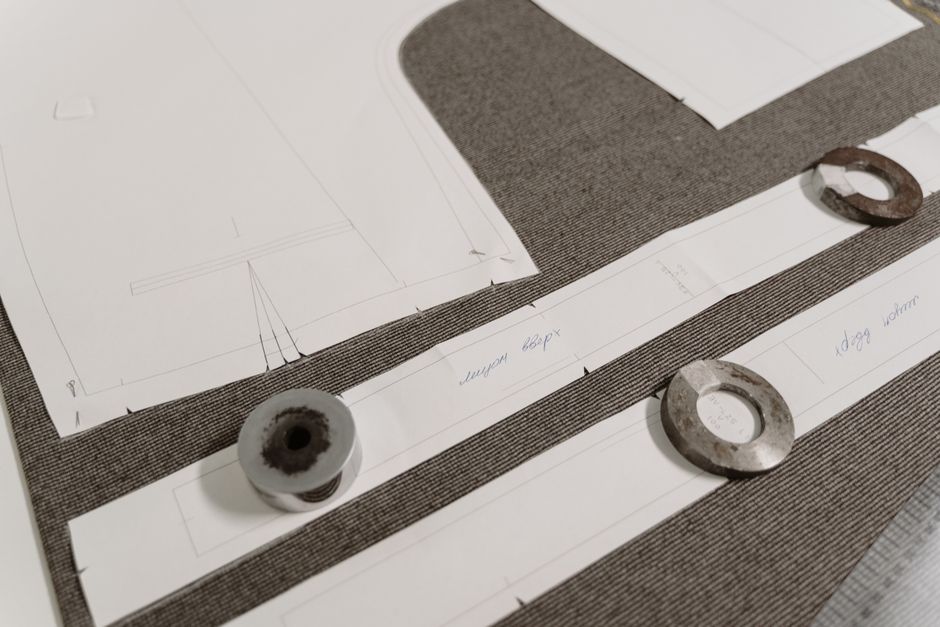
Woven fabrics vary widely in their grain behavior. Lightweight cottons and linens tend to hold grain lines clearly, making alignment straightforward. Heavier fabrics like denim or wool may have less obvious stretch differences, but the straight grain still provides stability. Slippery fabrics such as silk charmeuse or satin require additional care because they can shift easily; using weights instead of pins and cutting single layers can help maintain grain accuracy.
Knit fabrics do not have traditional grain lines in the same sense, because they are constructed from loops rather than woven threads. However, knit fabrics have a lengthwise and crosswise direction corresponding to the wales and courses. Similar principles apply: the lengthwise direction is usually more stable, and the crosswise direction offers more stretch. Patterns designed for knits often indicate a stretch direction, which serves a comparable role to grain lines. Sewists can adapt the concepts of straight grain and cross grain to knits by aligning pieces with the fabric’s natural stretch axis.
Regardless of fabric type, testing a small swatch before cutting the final garment can reveal how a particular material behaves along different grain directions. A simple drape test or a stretch test provides information about how much give each direction has. This knowledge allows for informed adjustments—for example, rotating a pattern slightly to achieve a desired amount of bias stretch without committing to a full bias cut. At Stitch Craft, we encourage sewists to explore these variations through sample pieces to build confidence in handling grain lines.